Restaurant Kitchen Flooring NJ: The Smart Choice for Every Commercial Kitchen

Running a restaurant is hard work. Between managing staff, food quality, and customer experience, your floor is probably the last thing on your mind. But here is the truth — the wrong floor can shut you down. Health inspectors notice everything. Your kitchen floor needs to be safe, clean, and tough enough to handle daily punishment. That is why restaurant owners across New Jersey are investing in professional-grade flooring solutions.
Why Restaurant Kitchen Flooring NJ Matters More Than You Think
The Demands of a Commercial Kitchen Floor
A kitchen floor faces pressure that no other surface in your building does. Hot water, cooking grease, dropped equipment, and constant foot traffic happen every single shift. Cheap flooring cracks, absorbs bacteria, and becomes a serious slip hazard. When a health inspector walks in, your floor tells a story. You want that story to be clean, professional, and compliant.
Safety Is Not Optional
Slip-and-fall accidents are one of the leading causes of workplace injuries in food service. Wet floors, spilled oils, and wash-down routines create real danger. A properly installed non-slip floor surface keeps your team protected every single day. It also protects your business from liability claims that can cost far more than any floor installation.
Health Code Compliance Starts From the Ground Up
Every health department in New Jersey expects commercial kitchens to meet strict sanitation standards. Your floor must be seamless, non-porous, and easy to sanitize. Grout lines and cracked tiles trap grease, bacteria, and food particles. That is a violation waiting to happen. A seamless floor eliminates all of those hiding spots and makes daily cleaning genuinely easy.
What Makes Epoxy the Best Option for Restaurant Flooring
Seamless and Non-Porous Surface
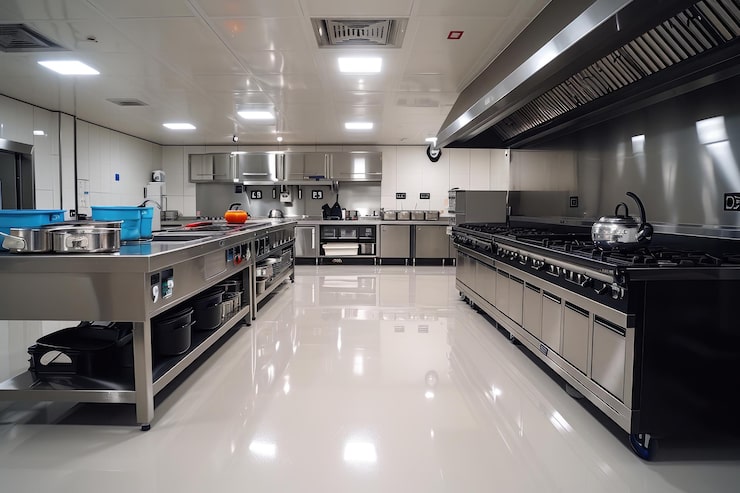
Epoxy flooring creates a single, unbroken surface across your entire kitchen floor. There are no grout lines. There are no seams. There are no joints. Bacteria has nowhere to hide. Cleaning becomes fast and effective. That is the kind of surface that passes inspections and keeps your kitchen truly clean.
Chemical and Thermal Resistance
Kitchens deal with extreme temperatures all day. Hot water from wash-downs, cold water from refrigeration drainage, and harsh cleaning chemicals are constants. Epoxy systems with urethane concrete topcoats handle thermal shock beautifully. The floor does not crack when temperatures change rapidly. It stands up to strong degreasers and sanitizers without degrading.
Long-Term Value and Return on Investment
A quality epoxy floor lasts for many years with minimal maintenance. You are not patching tiles or resealing grout every few months. The floor stays shiny, professional-looking, and fully functional for a long time. When you calculate the cost of repeated repairs versus one solid installation, the math is clear. Epoxy wins.
Choosing the Right Contractor in New Jersey
Experience With Food Service Environments
Not every flooring contractor understands the specific requirements of a commercial kitchen. You need someone who knows FDA compliance, understands thermal shock challenges, and can work around your schedule. Off-hours and overnight installations minimize downtime so your business keeps moving.
Local Knowledge Makes a Difference
New Jersey has specific regulations and inspection expectations. Working with a contractor who has served NJ restaurants for decades means you get someone who already understands what local health departments look for. That knowledge is genuinely valuable when the stakes are high.
Getting Your Floor Done Right the First Time
For professional restaurant kitchen flooring NJ installations, Epoxy Floors NJ has been the trusted name since 1988. Their team specifies the right system for your exact kitchen needs and backs the work with real expertise. Cutting corners on your kitchen floor is never worth it. Getting it done right the first time saves you money, stress, and potential violations down the road.
Key Features to Look for in a Kitchen Floor
Anti-Slip Texture
Any floor installed in a commercial kitchen must include anti-slip properties. This is non-negotiable for worker safety and health code compliance.
Easy-to-Clean Design
Your cleaning crew should be able to sanitize the floor quickly and completely. The surface should require no special tools or extended drying times between shifts.
Durability Under Heavy Equipment
Kitchen equipment is heavy. Floor jacks, commercial refrigerators, and prep tables put real stress on your floor. Your flooring system must handle that weight without denting or cracking.
Conclusion
Your restaurant kitchen floor is a critical part of your business operation. It affects safety, sanitation, inspections, and the long-term cost of running your facility. Investing in the right flooring system is not an expense — it is protection for everything you have built. A seamless, non-slip, chemical-resistant floor gives you peace of mind every single shift. Make the smart choice and get it installed by professionals who understand your world.